Advanced OBD-II diagnostics with Snap-On and Autologic equipment. We find the real problem, not just the code. 36-month / 36,000-mile warranty on all repairs.





That amber check engine light on your dashboard is your vehicle's way of telling you something needs attention. It could be minor or it could be the early warning of a serious and expensive problem. The worst thing you can do is ignore it. At RepairTech Automotive, we provide check engine light Kissimmee drivers trust for accurate, thorough diagnostics that go far beyond pulling a code.
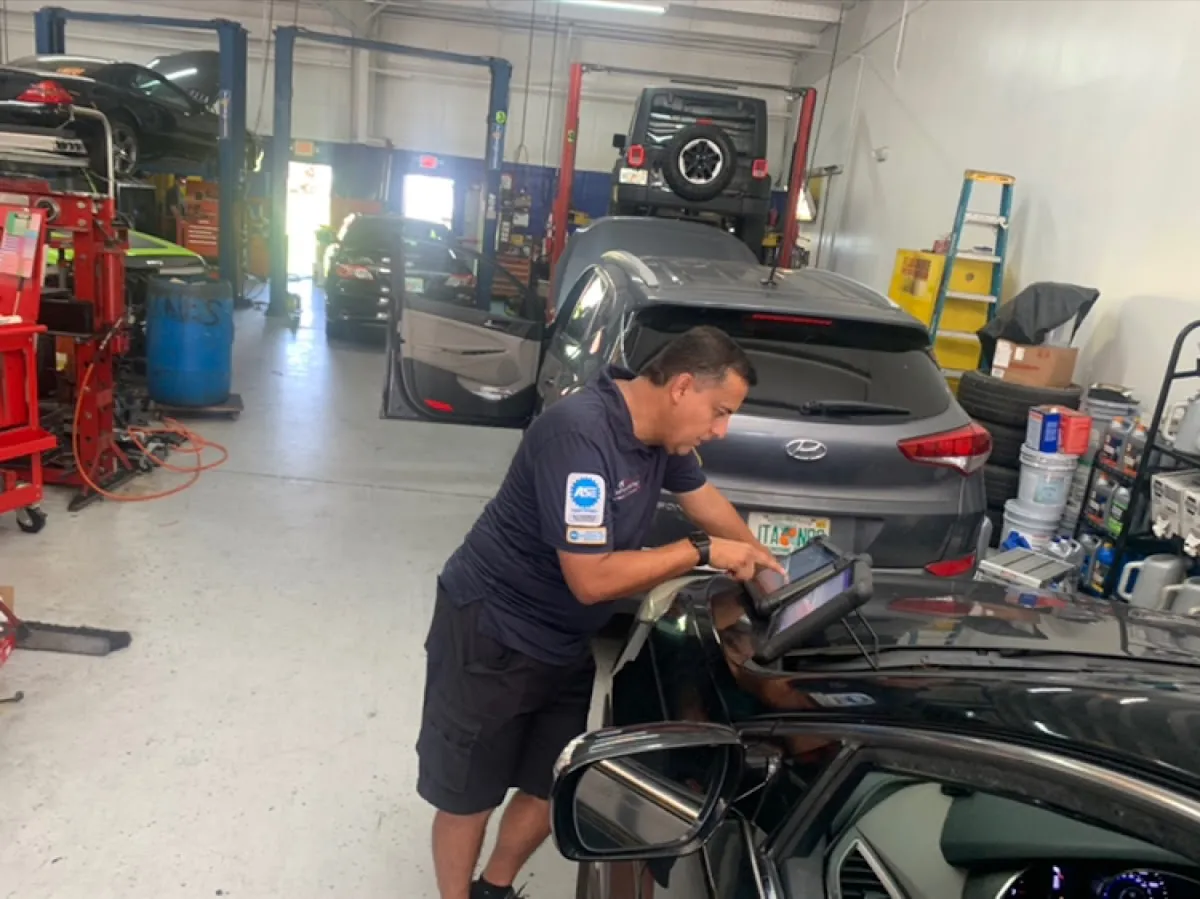
Your concern starts with a complimentary No-Touch Quick Look — professional triage, not diagnosis. The next step is a DVI — full health assessment, quoted at check-in with scanner time, photos, and video. After that, we decide together whether Diagnostic Evaluation (what failed) and Root Cause Troubleshooting (why) are needed. Every auto parts store offers a code scan, but a trouble code alone tells you almost nothing — and a code scan is not diagnosis. A P0420 code, for example, says the catalytic converter efficiency is below threshold. The actual cause could be a failing oxygen sensor, an exhaust leak upstream, a misfiring cylinder, or a worn converter. Replacing parts from codes alone is expensive guesswork. We charge professional diagnostic labor to confirm what failed (differential diagnosis) and why (root-cause troubleshooting), quoted before we proceed. Our ASE Master certified technicians use Snap-On and Autologic equipment to read the code and the context around it.
Freeze frame data captures a snapshot of engine operating conditions at the exact moment the code set. This includes engine RPM, coolant temperature, fuel trim values, vehicle speed, and engine load. By analyzing freeze frame data, we can determine whether the fault occurred at idle, at highway speed, under heavy load, or during cold startup. This context narrows the diagnosis dramatically and prevents unnecessary part replacement.
Mode 6 data is one of the most powerful diagnostic tools available, yet most shops never access it. Mode 6 shows the actual test results that the vehicle's computer runs internally to evaluate emissions system performance. Each test has a pass/fail threshold, and Mode 6 reveals exactly where your vehicle's results fall relative to those thresholds. A component can be failing its test but not yet badly enough to trigger a check engine light. Mode 6 data lets us identify components that are trending toward failure before they actually set a code, saving you from breakdowns and repeat visits.
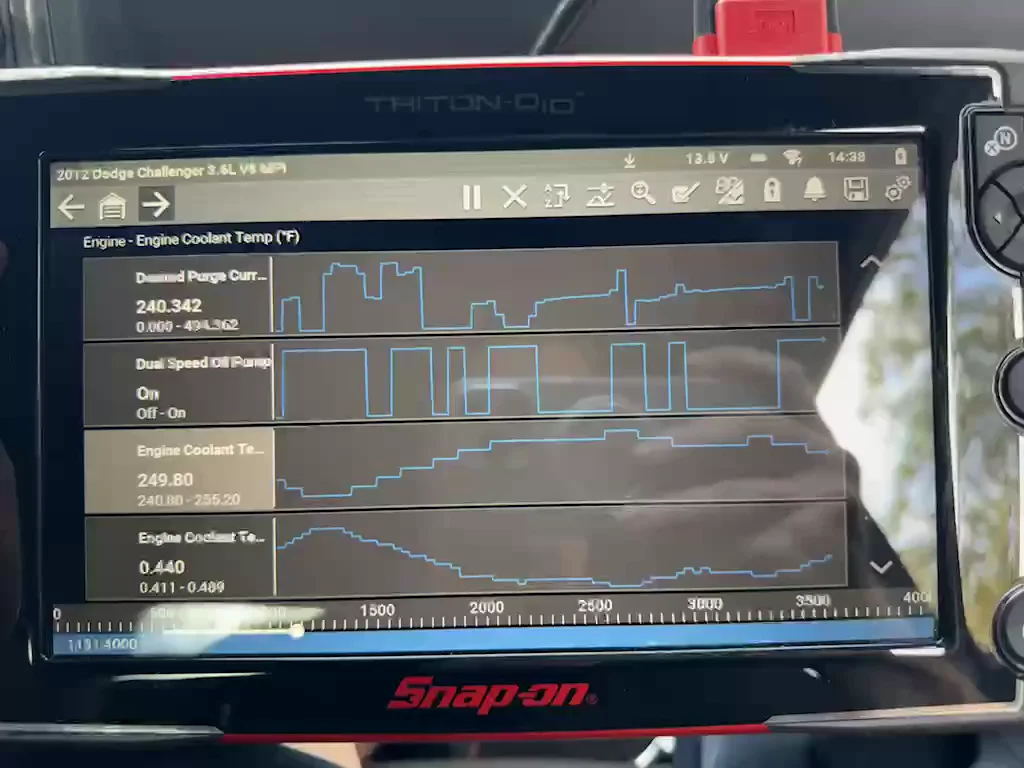
Live data monitoring allows our technicians to observe sensor readings in real time while the engine is running. We can watch oxygen sensor switching patterns, fuel trim adjustments, misfire counters, catalyst temperature rise, and dozens of other parameters as the engine operates under various conditions. This is especially valuable for intermittent problems that do not show up during a static code scan. By driving the vehicle with the scanner connected and monitoring live data, we can catch faults that only appear at specific RPMs, temperatures, or load conditions.
Pending codes are another layer of diagnostic information most shops overlook. A pending code means the vehicle's computer has detected a potential fault but has not confirmed it through the required number of drive cycles. Checking pending codes gives us advance warning of developing problems and helps us verify that a completed repair has resolved the underlying issue before clearing codes and sending the vehicle on its way.
Understanding the most common causes of a check engine light can help you make informed decisions about your vehicle's care. Here are the issues we diagnose most frequently at our Kissimmee shop:
Oxygen sensors measure exhaust gas composition and are essential for fuel efficiency and emissions compliance. A failing O2 sensor can reduce fuel economy by up to 40 percent and will eventually damage the catalytic converter if left unaddressed.
Catalytic converter degradation is often a secondary failure caused by prolonged driving with misfires, rich fuel conditions, or failing oxygen sensors. Replacing a catalytic converter is expensive, which is why addressing upstream problems early is so important.
Mass airflow sensor contamination or failure affects the engine's ability to meter fuel correctly, causing rough idle, hesitation, and poor fuel economy. In Florida's dusty and humid conditions, MAF sensors can become contaminated more quickly than in drier climates.
Ignition system faults including worn spark plugs, failing ignition coils, and damaged plug wires cause misfires that trigger the check engine light. A misfire dumps unburned fuel into the exhaust, overheating the catalytic converter and risking permanent damage.
Evaporative emission system leaks are often as simple as a loose or cracked gas cap, but can also involve a failing purge valve, vent valve, or cracked charcoal canister. These codes are extremely common in Florida's heat, as elevated temperatures stress the EVAP system components.
Snap-On and Autologic diagnostic platforms with factory-level capabilities for every make and model. No generic code readers here.
Every diagnostic comes with a written report including codes, freeze frame data, test results, and our recommended repair plan. Full transparency.
We diagnose before we repair. No guessing, no parts-swapping. Our thorough diagnostic approach saves you money by identifying the real problem upfront.
A steady light usually means drive it, but get it checked soon. A flashing light means stop driving — that typically indicates a misfire dumping raw fuel into the exhaust, which can destroy a catalytic converter in minutes and turn a small repair into an expensive one.
A code reader tells you which circuit reported a fault, not what failed. A P0301 says cylinder one is misfiring; it does not say whether that is a coil, a plug, an injector, a vacuum leak, or a compression problem. Replacing parts based on the code alone is the parts-cannon approach and it is why people pay twice. We test to find the actual cause.
Sometimes, if the condition that set it stops recurring. That does not mean the problem is gone — the stored code and freeze-frame data remain, which is exactly what our technicians read to see what the vehicle was doing when the fault occurred.
The longer you wait, the more expensive the repair becomes. Schedule a professional diagnostic with Kissimmee's trusted auto repair experts.